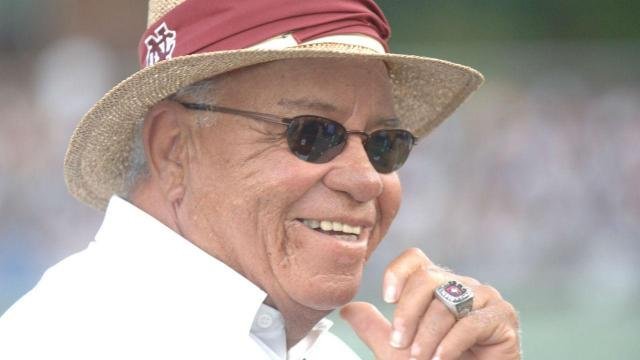
Herman Boone's life and career trajectory isn't just a story of a football coach; it's a powerful narrative woven into the fabric of American social change, defined by his unwavering commitment to both coaching excellence and racial integration. From the playing fields of North Carolina to the turbulent, unifying halls of T.C. Williams High School in Alexandria, Virginia, Boone stood as an agent of change, using sport as a crucible for character and an engine for desegregation. His journey offers profound lessons on leadership, resilience, and the enduring power of human connection in the face of division.
At a Glance: Herman Boone's Enduring Legacy
- Early Success: Boone established a formidable coaching record at predominantly Black schools in North Carolina and Virginia, leading teams to multiple championships.
- Confronting Injustice: He faced direct racial discrimination early in his career, being told a town wasn't "ready for a black coach," a challenge he met with dignity and determination.
- The T.C. Williams Chapter: Recruited to Alexandria, Virginia, Boone spearheaded the integration of T.C. Williams High School's football team, the Titans, famously depicted in "Remember the Titans."
- Mentor and Educator: Beyond wins and losses, Boone focused on his players' academic success, college prospects, and life skills, maintaining lifelong connections.
- Civil Rights Advocate: He quietly but consistently participated in civil rights initiatives, seeing his coaching role as a broader opportunity to effect positive change for all people.
- A Lasting Impact: His inspirational speeches and quotes continue to resonate, cementing his place as a figure whose influence extended far beyond the football field.
Early Life and Formative Years: Laying the Groundwork for a Life of Leadership
Born in 1935 in Rocky Mount, North Carolina, Herman Ike Boone's path to becoming an iconic figure began in the segregated South. He navigated his early education through Abraham Lincoln Elementary School and the now-closed Booker T. Washington High School, experiences that undoubtedly shaped his understanding of race and opportunity. His academic pursuits led him to North Carolina Central University, where he joined the Tau Psi chapter of the Omega Psi Phi fraternity. Boone earned a Bachelor of Arts and a Master of Science degree, preparing him not just for coaching, but for a multifaceted career dedicated to education and physical development.
His professional journey kicked off in 1958 at Luther H. Foster High School in Blackstone, Virginia. Here, Boone quickly made his mark, coaching football, basketball, and baseball. His football teams notched an impressive record of 26 wins against only six losses, securing three district championships. This early success wasn't merely about wins; it was about demonstrating a clear coaching philosophy rooted in discipline, strategy, and an ability to inspire young athletes to perform at their peak.
A Winning Streak in Williamston: When Excellence Met the Color Line
Boone's remarkable track record quickly gained attention. In 1961, he returned to his home state of North Carolina, taking on a pivotal role at E.J. Hayes High School in Williamston. His responsibilities extended beyond the football field, encompassing head coaching duties for both football and basketball, teaching biology and physical education, and even serving as a janitor. This period at E.J. Hayes was nothing short of legendary. Over nine years, his football teams amassed a staggering 99-8 record, a testament to his tactical brilliance and profound impact on his players. His 1966 football team, in particular, achieved national recognition, being hailed by Scholastic Coach's Magazine as "The Number One Football Team in America." He also led his teams to 13 state championships during his tenure.
Despite this unparalleled success and national acclaim, Boone encountered the harsh realities of racial prejudice. In 1969, with plans to integrate high schools in Williamston, Boone was informed by the school board that his illustrious career was at risk. The proposal was to demote him to an assistant coach because, as he was told, "This town just is not ready for a black coach." Boone's response became an enduring symbol of his character and conviction: “I’m not a black coach. I am a coach who happens to be black.” This poignant statement underscored his belief in merit over race, asserting his identity not as defined by his skin color, but by his professional capability. Unwilling to accept such a blatant demotion rooted in discrimination, Herman Boone resigned from his position, though his reputation as an exceptional coach remained firmly intact.
Alexandria's Call: Uniting a Divided City
News of Boone’s extraordinary winning record and his principled stance against discrimination traveled beyond North Carolina. The Alexandria School Board in Virginia, grappling with its own complex process of school integration, saw an opportunity. Alexandria had begun integrating its elementary schools in 1959 and fully integrated its high schools in 1965. However, in 1971, the city undertook a massive consolidation, merging students from three high schools into a single institution: T.C. Williams High School. This ambitious undertaking presented significant challenges, particularly in easing racial tensions among students from diverse backgrounds.
The school board recruited Herman Boone, initially as an assistant and then quickly as the head football coach at T.C. Williams. Their aim was clear: use the unifying power of sports to help bridge the racial divides within the newly consolidated student body. This move was particularly significant given its stark contrast to the situation Boone had faced in Williamston. Here, a Black coach was being elevated to a leadership position to foster unity, even as former head coach Bill Yoast, a respected white coach, was moved to serve as assistant coach. This deliberate and somewhat risky strategy highlighted the urgency of the situation and the trust placed in Boone's leadership capabilities.
The immediate challenge was to meld players from different racial and social backgrounds, many of whom harbored deep-seated prejudices, into a cohesive team. Boone understood that true integration required more than just sharing a locker room. He orchestrated a pivotal preseason training trip to Gettysburg, Pennsylvania. Away from the familiar comforts and tensions of Alexandria, the players were forced to confront their biases, learn about each other, and forge bonds based on shared goals and mutual respect. This intense experience laid the foundation for what would become an iconic season, capturing national attention to the extent that President Richard Nixon sent an aide, Dr. Brown, to witness this groundbreaking integrated football team firsthand.
The team's journey during this period, famously chronicled in the film "Remember the Titans," became a powerful symbol of how sport could reflect and, in some ways, accelerate social progress. The success of the T.C. Williams Titans under Boone's leadership wasn't just measured in wins on the scoreboard; it was measured in the friendships formed, the barriers broken, and the community united. For those who want to Learn more about Herman Boone and the legendary 1971 season, the story stands as a testament to his impact.
Beyond the Field: Mentor, Advocate, and Agent of Change
Herman Boone's influence extended far beyond play calls and game strategies. He was deeply committed to the holistic development of his players, recognizing that their success off the field was just as important as their performance on it. He held regular clinics to help his players with their homework, ensuring they remained academically eligible to play and, more importantly, preparing them for higher education. He actively guided many of them toward college opportunities, understanding that education was a critical pathway to future success.
Boone took a genuine, active interest in the lives of his players, maintaining contact with many of them long after they left T.C. Williams. One notable example is Earl Cook, who went on to become the Chief of Police in Alexandria, a testament to the lasting impact Boone had as a mentor. His ability to connect with young men from diverse backgrounds, instill discipline, and foster a sense of shared purpose was a defining characteristic of his coaching style.
Outside of coaching, Boone was a quiet but consistent participant in the civil rights movement in Alexandria. He volunteered with significant organizations such as the NAACP and the Urban League of Northern Virginia. For over 40 years, he attended numerous civil rights meetings, often seeing himself as a "supporting cast" member rather than seeking leadership roles. He humbly stated that he revered and learned at the knee of great Alexandria Civil Rights leaders, including Ferdinand Day, Nelson Green, Sr., Ira Robinson, and Melvin Miller. Boone was also a regular at "kitchen table" meetings, where community leaders discussed race relations, civil rights, and strategies to help young people achieve their potential. His personal philosophy was simple yet profound: "my goal has always been to be an agent of change for all people." This commitment wasn't confined to a specific time or place; it permeated every aspect of his life, from the locker room to community gatherings.
The Titans' Legacy and Later Life
Herman Boone's tenure as head coach at T.C. Williams High School ended in 1979. His departure followed allegations of player abuse and related complaints from three assistant coaches. While this marked the end of his active coaching career, it did not diminish his broader impact or his commitment to service. He retired from coaching but remained a prominent public speaker, sharing his experiences and insights from his transformative years on the sidelines.
In his retirement, Boone continued to be a beloved and respected figure in Alexandria. In 2016, he received the distinguished Living Legends of Alexandria award, a recognition bestowed upon notable citizens who have made significant contributions to the community. He lived with his wife, Carol Luck (also known as Carol Boone), in Alexandria. Together, they raised three daughters—Sharron, Donna, and Monica—and were blessed with six grandchildren: Camri, Kiara, William, Mackenzie, Myles, and Lauren. Sadly, his daughter Donna Dulany passed away in November 2014, and his wife Carol preceded him in death on March 23, 2019.
Boone maintained lifelong friendships and professional connections, including one with Willie Jeffries, a friendship that dated back to their time as assistant coaches in North Carolina. Boone championed Jeffries' induction into the College Football Hall of Fame, writing a powerful recommendation letter. In it, he asserted, "Without his leadership and example, there would not have been Remember the Titans or the advancement in race relations in sports that we have witnessed." This quote not only spoke to Jeffries' influence but also subtly acknowledged the broader societal impact that Boone himself embodied.
A Lasting Echo: Herman Boone's Enduring Influence
Herman Boone passed away at his home in Alexandria on December 18, 2019, at the age of 84, after a battle with lung cancer. His passing marked the end of an era, but his legacy continues to resonate powerfully.
His life was a testament to the idea that true leadership transcends specific roles. He was a coach who understood that the lessons learned on the field—discipline, teamwork, resilience, respect—were invaluable for navigating the complexities of life. He was an educator who prioritized academic success and personal growth, ensuring his players were prepared for futures beyond football. Most profoundly, he was an agent of change, a man who, through his actions and his unwavering moral compass, helped guide a community through a tumultuous period of integration.
Boone's story, particularly his role at T.C. Williams, offers a poignant reminder that progress often comes through challenging entrenched norms and building bridges where walls once stood. His inspirational speeches and quotes continue to this day to motivate and remind us of the power of unity and the importance of striving for a more equitable society. In a world still grappling with issues of division and prejudice, Herman Boone's life and career trajectory serves as a timeless blueprint for leadership, empathy, and the pursuit of positive change.