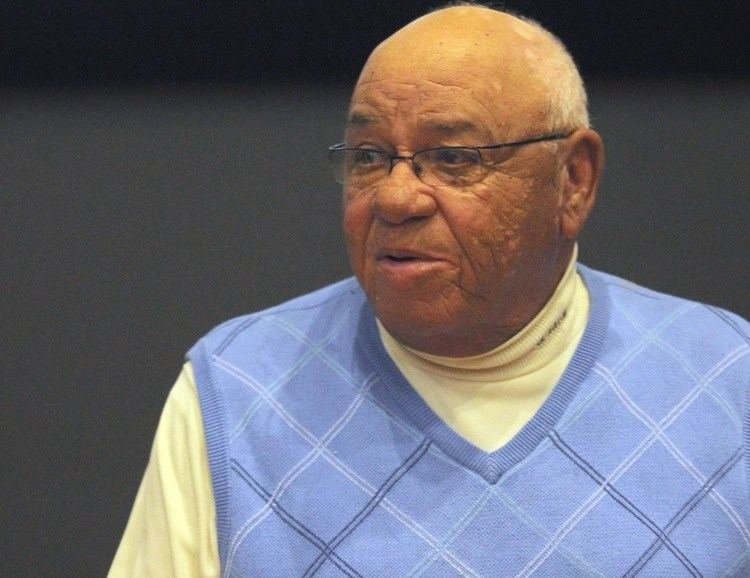
Herman Boone's social impact and civil rights role wasn't just confined to the sidelines of a football field. While many remember him as the legendary coach who united a racially divided high school team, his contributions extended far beyond sports, subtly yet powerfully shaping his community and advocating for equality for over four decades. He was a force for change, proving that leadership, persistence, and an unwavering commitment to youth could break down even the most entrenched barriers.
This guide delves into the multifaceted legacy of Herman Boone, exploring not just his celebrated coaching triumphs but also his quiet, persistent work as a civil rights advocate, mentor, and "agent of change for all people." You'll discover how his early life, his courageous stance against prejudice, and his unique leadership style carved a path toward integration and understanding in a turbulent era.
At a Glance: Boone's Enduring Legacy
- A Champion Against Prejudice: Faced demotion due to race, famously stating, "I’m not a black coach. I am a coach who happens to be black."
- Uniter of Communities: Recruited to T.C. Williams High School in Alexandria, Virginia, specifically to help ease racial tensions through football.
- Beyond the Game: Focused on holistic development, holding clinics for homework, ensuring player eligibility, and assisting them in getting into college.
- Civil Rights Advocate: Volunteered with organizations like the NAACP and Urban League for over 40 years, primarily in "supporting cast" roles, learning from community leaders.
- Pillar of Mentorship: Maintained contact with former players, many of whom became community leaders themselves, including Alexandria Police Chief Earl Cook.
- Groundbreaking Achievement: Led the first racially integrated high school football team in the Washington, D.C. region to a Virginia state championship.
- A "Kitchen Table" Diplomat: Participated in informal meetings to foster dialogue on race relations, civil rights, and youth achievement.
More Than a Coach: Herman Boone's Formative Years and Early Battles
Before he became a national symbol of unity, Herman Boone's life was a testament to resilience and an early encounter with the racial prejudices he would spend his life combating. Born in Rocky Mountain, North Carolina, in 1935, Boone was driven by a thirst for knowledge and a love for sports, earning a B.S. in biology and physical education, followed by a master’s degree in physical education, both from the University of North Carolina. His academic pursuits laid a strong foundation, but it was on the field where his leadership truly began to blossom.
Boone’s coaching career began in 1958 in Nottoway, Virginia, but it was in Williamston, North Carolina, at E.J. Hayes High School, where he truly made his mark. From 1961, he served not only as head football and basketball coach but also as a biology and physical education teacher, and even a janitor – a true jack-of-all-trades committed to his school and students. During his tenure at E.J. Hayes, Boone’s teams achieved remarkable success, securing 13 state championships. This incredible record showcased his burgeoning talent and formidable work ethic.
However, the tide of desegregation brought with it challenges that tested Boone's resolve. As schools integrated, racial prejudice reared its head, threatening to demote him despite his proven track record. This moment elicited one of his most famous and defining responses: "I’m not a black coach. I am a coach who happens to be black." This statement wasn't just a rebuttal; it was a declaration of identity and competence that transcended race, asserting his professional worth independent of skin color. This early battle foreshadowed the larger fight for equity he would soon undertake on a much more public stage.
Forging Unity in Crisis: T.C. Williams High School and the Titans
The early 1970s saw Alexandria, Virginia, grapple with the painful process of school integration. White and Black high schools were consolidated into a single institution: T.C. Williams High School. The merger was fraught with tension, mistrust, and the very real threat of social unrest. It was into this crucible that the Alexandria School Board made a pivotal decision: they recruited Herman Boone, first as an assistant, then as head football coach. His mission was clear – use the power of sport to help ease the racial tensions tearing the community apart.
Boone understood that success on the football field could be a powerful catalyst for unity off it. His approach was relentless and uncompromising, demanding discipline and respect from every player, regardless of their background. He orchestrated a grueling training camp that forced Black and white players to confront their prejudices, rely on each other, and forge a new identity as a single team. This wasn't merely about winning games; it was about building bonds, fostering understanding, and demonstrating that common goals could transcend racial divides.
Beyond the gridiron, Boone’s commitment to his players was holistic. He held clinics to help them with homework, ensuring their academic eligibility for college. He wasn't just preparing them for Friday night lights; he was preparing them for life. This dedication helped countless young men secure opportunities for higher education, opening doors that might have otherwise remained closed. His impact wasn't just on their athletic performance but on their entire future. The 1971 season, culminating in an undefeated record and a Virginia state championship, became a powerful symbol of what could be achieved when a community, however fractured, chose to come together. It showed the entire Washington, D.C. region that integration, though challenging, was not only possible but could lead to extraordinary triumphs.
A Quiet, Persistent Advocate: Boone's Unseen Civil Rights Work
While the "Remember the Titans" narrative rightly focuses on Boone's very public role in school integration, his dedication to civil rights extended far beyond the football field, often in less celebrated but equally crucial ways. For over 40 years, Herman Boone was a steadfast volunteer and "supporting cast" member in local Alexandria Civil Rights organizations, including the NAACP and the Urban League of Northern Virginia. His presence at countless meetings, behind-the-scenes discussions, and community initiatives was a testament to his deep, abiding commitment to racial justice.
Boone wasn't always the one in the spotlight during these efforts; he was a learner and a contributor, absorbing wisdom from established leaders like Ferdinand Day, Nelson Green, Sr., Ira Robinson, and Melvin Miller. He understood the power of collective action and the necessity of building bridges through consistent engagement. These experiences shaped his perspective and fueled his quiet determination to be an "agent of change for all people," a personal mission he articulated clearly.
He regularly participated in informal "kitchen table" meetings – intimate gatherings where community members, activists, and leaders discussed pressing issues of race relations, civil rights, and youth achievement. These candid conversations were crucial for fostering understanding, strategizing, and building the consensus necessary for progress. Boone's role in these settings highlights his belief that true change often begins not with grand gestures, but with consistent, often quiet, dialogue and collaboration within the community itself. His legacy is as much about these unsung hours of advocacy as it is about his famous championship season.
Leadership Under Pressure: Navigating Challenges with Unwavering Drive
Herman Boone's leadership style was undeniably impactful, marked by a fervent passion, an unyielding persistence in the face of challenges, and an immeasurable work ethic. He led by example, demanding excellence from himself and everyone around him. This intensity was precisely what was needed to forge a championship team out of two disparate groups of young men deeply affected by the racial tensions of their time. His directness and firm hand cut through the noise, leaving no room for doubt about expectations or commitment.
However, even the most effective leaders have areas for growth, and Boone was no exception. He was known for a tendency to isolate himself in decision-making, a command-and-control delivery style that could be perceived as rigid. While some saw this as decisive and necessary given the challenging circumstances, it also sometimes led to trust issues, particularly in an era rife with social suspicion and racial distrust. It’s crucial to contextualize these traits: in a time of intense racial animosity and high stakes, a strong, centralized leadership was often seen as the only way to maintain order and drive a deeply divided group towards a common goal.
His ability to push boundaries and challenge the status quo, even if it meant stepping on toes, was ultimately crucial for the integration process at T.C. Williams. He wasn't there to make friends; he was there to make a team, and in doing so, he made a statement about the possibility of racial harmony. His methods, though sometimes tough, were undeniably effective in achieving a profound social outcome that reverberated far beyond the football field. For more insights into how his story became a global phenomenon, you can Explore Herman Boones story.
Boone's Rippling Effect: A Legacy That Endures
The 1971 T.C. Williams Titans’ championship season wasn't just a moment of sporting glory; it was a powerful narrative that sparked conversations about race, unity, and leadership across the nation. Herman Boone's dedication to his players extended far beyond their high school years. He maintained contact with many of his former players, becoming a lifelong mentor and a consistent presence in their lives. This enduring connection underscores his deep commitment to their success, not just as athletes, but as individuals and community members.
One notable example is Earl Cook, who played for Boone and later became the Chief of Police in Alexandria, Virginia. Cook's journey, like that of many others, was undoubtedly influenced by Boone's guidance and the lessons learned on the integrated football team. These former players went on to become successful professionals, civic leaders, and advocates for their own communities, carrying forward the values of unity and perseverance that Boone instilled in them. This continuous mentorship highlights the profound, long-term impact of Boone's investment in youth development.
His influence was also deeply felt within his own family. Boone was married to Carol Boone and had three daughters: Sharon Henderson, Monica Merritt, and Donna Dulany (who passed away in November 2014). The values he championed publicly were lived out privately, shaping his family life and reinforcing his commitment to building a better future for all. The story of Herman Boone and the 1971 Titans resonated so deeply that it was immortalized in the acclaimed film "Remember the Titans," bringing his powerful message of overcoming racial barriers to a global audience and solidifying his place in history as a symbol of hope and integration. His legacy continues to inspire discussions about how sports can serve as a microcosm for societal change and how determined leadership can foster unity in the face of division.
Common Questions About Herman Boone's Impact
Understanding Herman Boone's legacy often involves grappling with the nuances of his story, especially given its popular portrayal. Here are some common questions and clarifications:
Was Remember the Titans an accurate depiction of events?
The film "Remember the Titans" captures the spirit and essential truth of Herman Boone's role in integrating the T.C. Williams High School football team. It accurately portrays the intense racial tensions of the time, the challenges faced by the integrated team, and their ultimate triumph in winning the state championship. However, like many Hollywood dramatizations, it took creative liberties for narrative effect. Some characters were composites, timelines were compressed, and certain conflicts were exaggerated or simplified. While a powerful and inspiring story, it's important to remember it's a dramatized account, not a historical documentary, and some details are altered from the historical record to enhance the storytelling.
How did Boone's personal leadership style impact his role in civil rights?
Boone's leadership was characterized by strong passion, unwavering persistence, and an unparalleled work ethic. These traits were instrumental in his civil rights role, both on and off the field. His direct, command-and-control style, while sometimes seen as isolating or challenging, allowed him to enforce discipline and push through resistance in a highly volatile environment. In the context of deep-seated racial prejudice, this firm hand was often necessary to ensure that integration efforts were not derailed. His refusal to compromise on the principles of equality and unity, combined with his tireless efforts, made him an effective, albeit sometimes controversial, agent of change.
What lessons can we learn from Herman Boone's approach today?
Boone's story offers several enduring lessons for contemporary challenges. First, it highlights the power of shared goals (like a championship) to transcend deep-seated divisions. Second, it underscores the importance of visible, committed leadership willing to confront prejudice directly. Third, Boone's holistic approach to mentoring – focusing on academics and personal growth alongside athletics – reminds us that true leadership develops the whole person. Finally, his quiet, consistent involvement in civil rights organizations, even in "supporting cast" roles, teaches us that impactful change often requires sustained, collective effort, not just single heroic moments. His belief in being an "agent of change for all people" remains a timeless call to action.
Embracing Boone's Legacy: Your Role in Fostering Unity
Herman Boone's life was a testament to the profound impact one individual can have when driven by principle and a tireless commitment to justice. His story, famously brought to the big screen, continues to resonate because it speaks to universal truths about division, empathy, and the extraordinary power of unity. Yet, his legacy is far richer than just a Hollywood narrative; it's a blueprint for active citizenship and persistent advocacy in the face of adversity.
Lessons in Leadership
Boone taught us that true leadership isn't always about being universally liked, but about being unwavering in your mission. It's about setting high standards, holding people accountable, and inspiring them to achieve more than they thought possible, especially when the stakes are highest. His ability to see beyond skin color and focus on shared humanity and collective aspiration created a space where young men could forge bonds that transcended societal prejudice. This remains a vital lesson for leaders in any field today, whether in business, education, or community organizing.
Continuing the Conversation
Herman Boone's work didn't end with the 1971 championship, nor should the lessons we draw from it. His four decades of involvement with organizations like the NAACP and the Urban League of Northern Virginia remind us that civil rights is an ongoing journey, not a destination. His "kitchen table" diplomacy underscores the power of dialogue and the importance of fostering understanding in intimate, community-driven settings.
As you reflect on Herman Boone's social impact and civil rights role, consider how his principles of persistence, passion, and belief in people can inform your own actions. How can you, in your own sphere, become an "agent of change for all people"? The legacy of Coach Boone challenges us to look beyond differences, to confront injustice, and to actively work towards a more inclusive and unified world, one conversation, one team, and one community at a time.