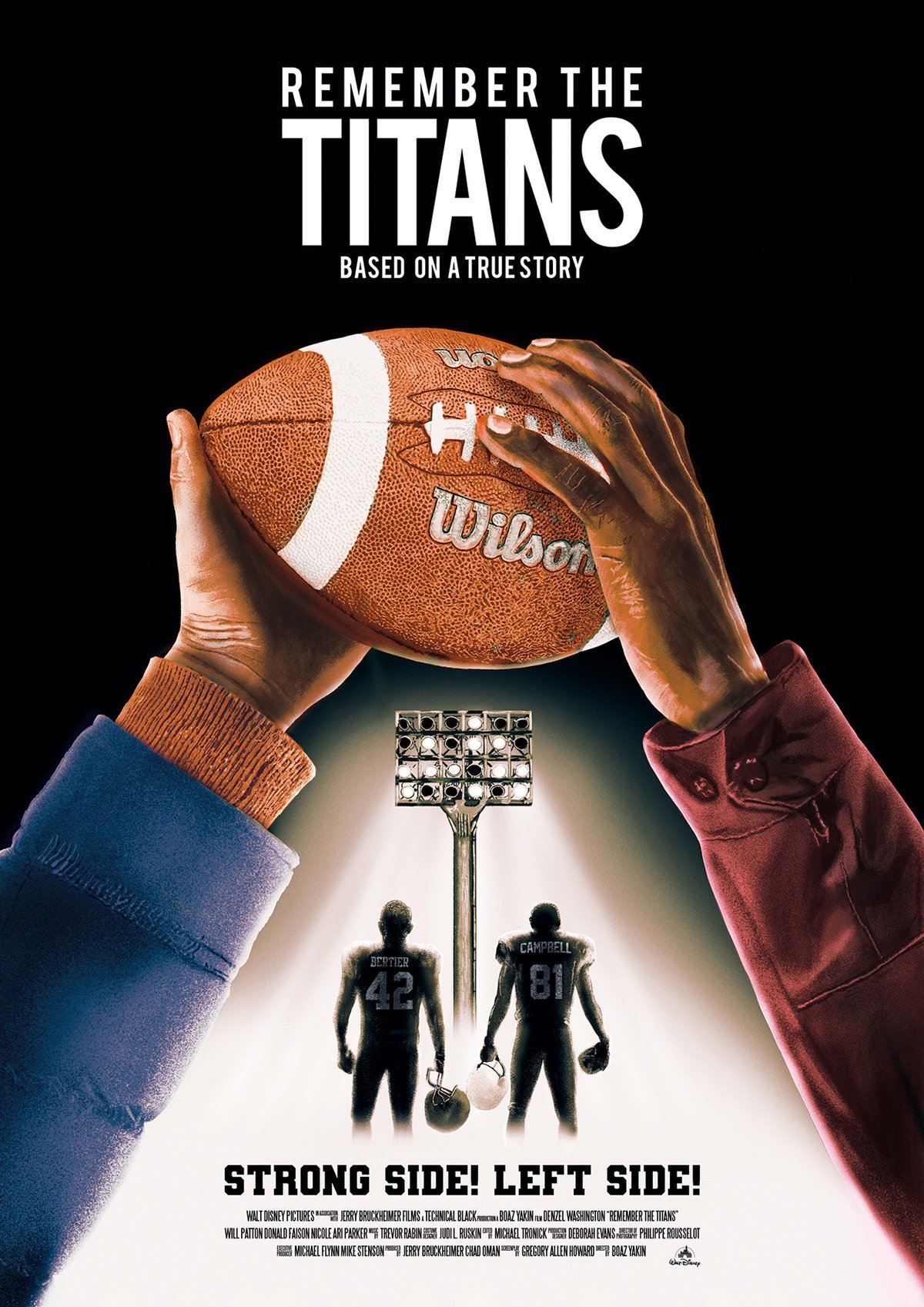
The rumble of cleats on a football field, the crisp autumn air of Virginia, and a divided community struggling to find its footing – these images are instantly conjured by "Remember the Titans." Released in 2000, this film didn't just tell a story; it etched a powerful narrative into the cultural consciousness, profoundly shaping the understanding of Remember the Titans: Movie's Impact on Boone's Legacy. For many, the movie is the history, an inspiring portrayal of how a high school football team transcended racial prejudice. But what does a blockbuster hit, albeit one rooted in truth, mean for the real Herman Boone, the man behind the legendary coach?
This deep dive isn't just about reliving a great movie; it's about dissecting how Hollywood's lens magnified, reframed, and ultimately cemented a real man's place in history.
At a Glance: What You'll Discover About Boone's Legacy
- A Cinematic Icon: How Denzel Washington's powerful portrayal elevated Herman Boone to a symbol of courageous leadership.
- The Blend of Fact and Fiction: Understanding the artistic liberties taken by the film and how they molded public perception.
- Enduring Lessons: The universal themes of unity, leadership, and overcoming prejudice that the movie reinforced, directly impacting Boone's legacy.
- Beyond the Screenplay: A look at the real Herman Boone, acknowledging his lifelong contributions distinct from his cinematic counterpart.
- A Global Amplifier: How the film ensured Boone's story reached millions, making him an enduring figure in discussions about civil rights and sports.
The Roar of '71: Setting the Stage for a Cinematic Legend
To truly grasp the film's influence, we must first understand its genesis. "Remember the Titans" transports us to Alexandria, Virginia, in the turbulent year of 1971. This wasn't just any year; it was a crucible for the community, marked by the forced racial integration of three high schools into a single entity: T.C. Williams High. Racial tensions ran high, simmering beneath the surface of everyday life, often boiling over into open conflict.
Amidst this societal upheaval, a seemingly ordinary high school football team became an unlikely beacon of hope. The story zeroes in on the Titans, led by Herman Boone, a Black coach (played with an unforgettable intensity by Denzel Washington), who was brought in to lead the newly integrated team. He was joined by Bill Yoast (played by Will Patton), the previously successful white head coach, now demoted to assistant. This setup, fraught with personal and communal challenges, provided the perfect canvas for a powerful narrative about unity against daunting odds.
Directed by Boaz Yakin and produced by Jerry Bruckheimer, the film was an undeniable commercial success, grossing $136.8 million against a $30 million budget. Its widespread appeal ensured that the story of the 1971 T.C. Williams team, and especially Coach Boone, became known far beyond the borders of Alexandria.
A Titan's Portrayal: Denzel Washington's Herman Boone
For many who watched "Remember the Titans," Herman Boone is Denzel Washington. The actor's commanding presence, his ability to convey both stern discipline and deep empathy, created a character that was instantly iconic. This portrayal became the primary lens through which millions understood Coach Boone's legacy.
The Coach as Catalyst: Leadership and Unity on Screen
Washington’s Boone is a force of nature—uncompromising, unyielding, and absolutely determined to forge a team, and by extension, a community, out of disparate parts. He's the man who takes his team to Gettysburg, demanding they confront the historical consequences of division on hallowed ground. His words resonate with urgency: "If we don't come together right now on this hallowed ground, we too will be destroyed.”
This cinematic Boone embodies the tough-love leader who recognizes that success isn't just about winning games; it's about winning hearts and minds. He doesn't shy away from uncomfortable truths, famously telling his players, "I don't care if you like each other or not, but you will respect each other." These scenes, crafted for maximum emotional impact, portray Boone as the unwavering moral compass and the driving force behind the team's — and community's — transformation.
Beyond the Sidelines: Boone's Cinematic Character Arc
The film also explores Boone's personal sacrifices and the weight of expectation on his shoulders. He's not just a coach; he's a symbol of progress in a racially charged environment. This narrative arc, brilliantly delivered by Washington, paints Boone as a man who not only excelled in his profession but also stood as a beacon of integrity and courage. It's a portrayal that transcends mere athletic achievement, elevating Boone to the status of a socio-cultural hero. This powerful depiction, seen by millions, inextricably linked Boone's name with the triumph of unity over division.
Fact vs. Fiction: The Artistic License of "Remember the Titans"
While "Remember the Titans" is based on a true story, it is crucial to remember that it is, first and foremost, a Hollywood film. Like many historical dramas, it takes artistic liberties to craft a more compelling narrative, streamline timelines, and heighten emotional stakes. These creative decisions, while effective for storytelling, undeniably shape the public's perception of Herman Boone and the events of 1971.
Shaping the Narrative: Why Alterations Matter
The film's artistic licenses are not malicious; they serve the purpose of telling a cohesive, inspiring story within a two-hour runtime. However, understanding these changes is vital for a nuanced appreciation of Boone's actual legacy. The alterations often simplify complex realities, condense multiple events into single dramatic moments, or amplify certain personality traits for dramatic effect. The cumulative effect is a story that, while true in spirit, is not always perfectly accurate in detail.
Unpacking the Liberties: Specific Examples
- Gettysburg Casualties: Boone dramatically states that 50,000 men died at Gettysburg. While casualties (killed, wounded, captured, missing) were indeed around 50,000, the number of actual deaths was significantly lower, closer to 7,000-10,000. This exaggeration serves to amplify the gravity of his speech.
- The Fictional Gun: Reports from those close to Boone indicate he didn't own a gun, yet the movie depicts him wielding one during a tense confrontation. This adds a layer of aggressive authority to his character that may not have been present in real life.
- Timing of Gerry Bertier's Accident: In the movie, star player Gerry Bertier's paralyzing car accident occurs before the championship game, adding immense emotional weight to the team's final push. In reality, Bertier's tragic accident happened after the championship game. This resequencing fundamentally changes the narrative arc and the immediate emotional context of the team's victory. Learn more about Herman Boone and the lives impacted by the events of 1971.
- Ronnie Bass's Image: Player Ronnie "Sunshine" Bass is portrayed as a long-haired, free-spirited hippie quarterback from California. While Bass was indeed a real player, his real-life appearance didn't match this cinematic stereotype. This change likely aimed to introduce a visually distinct character who symbolized the counter-culture elements of the era.
- The "Sunshine-Gary Kiss": A memorable, albeit fictional, moment in the film involves Bass kissing Bertier on the cheek, a symbolic gesture of breaking down barriers. This event never occurred in real life but was added to underscore the theme of unexpected unity.
- Minor Details: Other smaller changes include a scoreboard error wrongly indicating a road game during a 17-10 win, altered names for Boone’s daughters (Cheryl and Sharon in the film, different in reality), and a toilet thrown through a window (in reality, it was a brick). These details, while seemingly small, contribute to the overall dramatization.
These artistic licenses, while understandable from a filmmaking perspective, mean that the movie presents a heightened, more dramatic version of history. It creates a "cinematic Boone" who is larger than life, perhaps more overtly confrontational or singularly responsible for team unity than the real man might have been in every instance. This isn't to diminish Boone's actual achievements, but rather to acknowledge the power of storytelling in shaping public memory.
The Enduring Moral: Lessons That Transcended the Screen
Despite its factual deviations, "Remember the Titans" powerfully communicated core themes that resonate deeply with audiences. These lessons are integral to Boone's cinematic legacy, associating his name with universal values that extend far beyond the football field. The film acts as a teaching tool, illustrating principles that remain relevant decades later.
Leadership Through Adversity
The film is a masterclass in leadership, demonstrating how Boone navigated a hostile environment and transformed a fractured group into a cohesive unit. His approach, though strict, was rooted in a belief in the potential of every player, regardless of race. The iconic line, "Attitude reflects leadership, Captain," encapsulates this core tenet: a leader's conviction and example set the tone for the entire team. This portrayal reinforces the idea that true leadership often emerges in the face of profound challenges.
Diversity as Strength
One of the most poignant lessons the movie imparts is the immense strength found in diversity. The initial struggles of the Black and white players to coexist, let alone collaborate, reflect the broader societal tensions. However, through shared goals, grueling practices, and Boone's unwavering demand for respect, the team learns to harness their differences as an advantage. This message—that varied perspectives and backgrounds ultimately make a group stronger—is a cornerstone of the film's enduring appeal and a key aspect of Boone's celebrated legacy.
Overcoming Prejudice and Building Bridges
At its heart, "Remember the Titans" is a story about battling prejudice and building bridges in a divided world. The initial animosity between players like Gerry Bertier and Julius Campbell slowly transforms into a profound friendship, symbolizing the broader healing possible within the community. The film teaches that choosing to overcome fear, confronting biases head-on, and actively embracing unity leads to extraordinary achievements, not just in sports but in life. It's a testament to Boone's guiding hand that this transformation occurs, making him a symbol of social progress.
The Real Herman Boone: Beyond the Hollywood Script
While the film provides a captivating and inspiring narrative, it's essential to recognize the real Herman Boone as a man of substance, whose contributions extended beyond the singular championship season of 1971. The movie offers a snapshot, but his life was a continuum of dedication and impact.
A Lifelong Commitment to Education and Coaching
Herman Boone was a career educator and coach. His time at T.C. Williams High was significant, but it was one chapter in a life devoted to mentoring young people. He brought a rigorous approach to coaching, demanding excellence and discipline from his players. Those who knew him often spoke of his intensity and his passion for developing not just athletes, but well-rounded individuals.
His focus wasn't solely on wins and losses, but on character development, academic achievement, and preparing students for life beyond high school. He continued to be an advocate for youth and education long after his coaching days were over, leaving a lasting mark on countless lives in Alexandria and beyond. This real-life dedication provides a deeper, more grounded understanding of the qualities that made him such an impactful figure.
The Impact on Students and Community
Beyond the dramatic cinematic moments, the true legacy of Herman Boone lies in the human connections he forged. He, along with Bill Yoast, created an environment where young men, despite intense societal pressures, learned to trust and rely on each other. The bond between players like Gerry Bertier and Julius Campbell was very real, embodying the spirit of unity the coaches strove to instill. Bertier was paralyzed from a car accident and tragically passed away in 1981 at 27, a loss that profoundly affected many, including Boone.
Boone’s efforts in 1971, while perhaps less theatrical than their film counterparts, were genuinely instrumental in easing the difficult transition of integration for many students and their families. He faced real challenges and prejudices, and his perseverance helped lay groundwork for a more unified school and community. His legacy, shared with Yoast, who also passed away in 2019, is one of steadfast leadership and a profound impact on the lives he touched.
The Ripple Effect: How the Film Cemented a Legacy
"Remember the Titans" didn't just tell a story; it transformed Herman Boone's personal history into a widely recognized narrative of triumph. The film served as an unparalleled amplifier, ensuring that his story, and the lessons learned in 1971, reached a global audience. This widespread exposure irrevocably cemented his legacy.
A Symbol of Integration and Unity
Prior to the movie's release, the story of the 1971 T.C. Williams Titans was a local legend. Post-2000, it became a national, even international, touchstone for discussions on racial integration, sportsmanship, and overcoming division. Herman Boone, through Denzel Washington's portrayal, became a symbol—a powerful representation of the dedicated individual who, against overwhelming odds, fosters unity and achieves greatness.
The movie placed Boone squarely in the pantheon of inspirational figures whose stories are invoked in commencement speeches, leadership seminars, and discussions about social justice. His name became synonymous with battling prejudice and fostering teamwork, giving him a prominent place in the narrative of American civil rights struggles.
Inspiring Future Generations
The emotional depth and uplifting message of "Remember the Titans" have inspired countless individuals. Coaches have adopted Boone's cinematic tactics, leaders have quoted his lines, and young people have found motivation in the team's journey. The film continues to be shown in classrooms and team meetings, serving as a powerful allegory for what can be achieved when people set aside differences for a common goal. This continuous engagement ensures that Boone's legacy, though filtered through a Hollywood lens, remains vibrant and relevant for new generations.
The Power of Storytelling
Ultimately, the film demonstrates the profound power of storytelling. By dramatizing the events of 1971, "Remember the Titans" gave Herman Boone's efforts a platform they might never have otherwise achieved. While acknowledging the historical inaccuracies is important, it's equally crucial to recognize that the film brought vital themes of racial harmony, leadership, and perseverance to a mass audience, ensuring that Herman Boone's name will forever be associated with these powerful ideals.
Addressing Common Questions About Boone's Legacy
Given the blend of fact and dramatization in "Remember the Titans," it's natural for questions to arise about the man himself and the true events. Here are some common inquiries, clarified with details from the historical record.
Was Coach Boone Really as Strict as Portrayed?
Yes, by all accounts, Herman Boone was known for his rigorous discipline and demanding coaching style. Former players and colleagues confirm that he was an intense and unyielding coach, much like Denzel Washington's portrayal. His belief was that strict adherence to rules and a relentless work ethic were essential for success, particularly in the challenging environment of a newly integrated team. While the film may have amplified certain moments for dramatic effect, the core essence of his strict yet purposeful leadership was authentic.
How Accurate Was the Racial Tension Depicted?
The film captures the significant racial tensions present in Alexandria, Virginia, in 1971 with considerable accuracy. While the movie might condense incidents or create composite characters, the underlying climate of prejudice, hostility, and the struggles of integration were very real. The film’s depiction of racial slurs, segregated diners, and community unrest reflects the lived experiences of many at that time. The football team's journey toward unity was indeed a microcosm of the larger community's struggle for harmony.
What Happened to Herman Boone After 1971?
Herman Boone continued coaching at T.C. Williams High School for several more years after the iconic 1971 season. He eventually retired from coaching and teaching, remaining a beloved and respected figure in Alexandria. He continued to give motivational speeches and make appearances, reflecting on his experiences and the lessons of the 1971 team. Boone passed away in 2019 at the age of 84, leaving behind a profound legacy as an educator, coach, and symbol of overcoming racial division, a legacy cemented by the film's global reach. His co-coach, Bill Yoast, also passed away in 2019, just a few months before Boone.
Beyond the Credits: What We Can Learn from Boone's Enduring Story
"Remember the Titans" is more than just a sports movie; it's a testament to the human spirit's capacity for growth, unity, and overcoming adversity. Herman Boone's legacy, magnified and shaped by this powerful film, serves as a timeless reminder that leadership, empathy, and a commitment to shared goals can bridge even the deepest divides.
For anyone facing a divided team, a challenging transition, or simply seeking inspiration to lead with courage, the story of Herman Boone and the 1971 T.C. Williams Titans offers profound lessons. It encourages us to look beyond superficial differences, demand respect, and work tirelessly towards a common vision. The film's message, distilled through Boone's character, reminds us that the greatest victories often come not just from winning a game, but from unifying a community. Embrace the spirit of the Titans: strive for excellence, demand respect, and always choose unity over division.